
Canadian Colocation Vacancy Hits Record Low as AI Demand Accelerates
- Market Insights
-
Apr 14
-
4 min read
- Share post
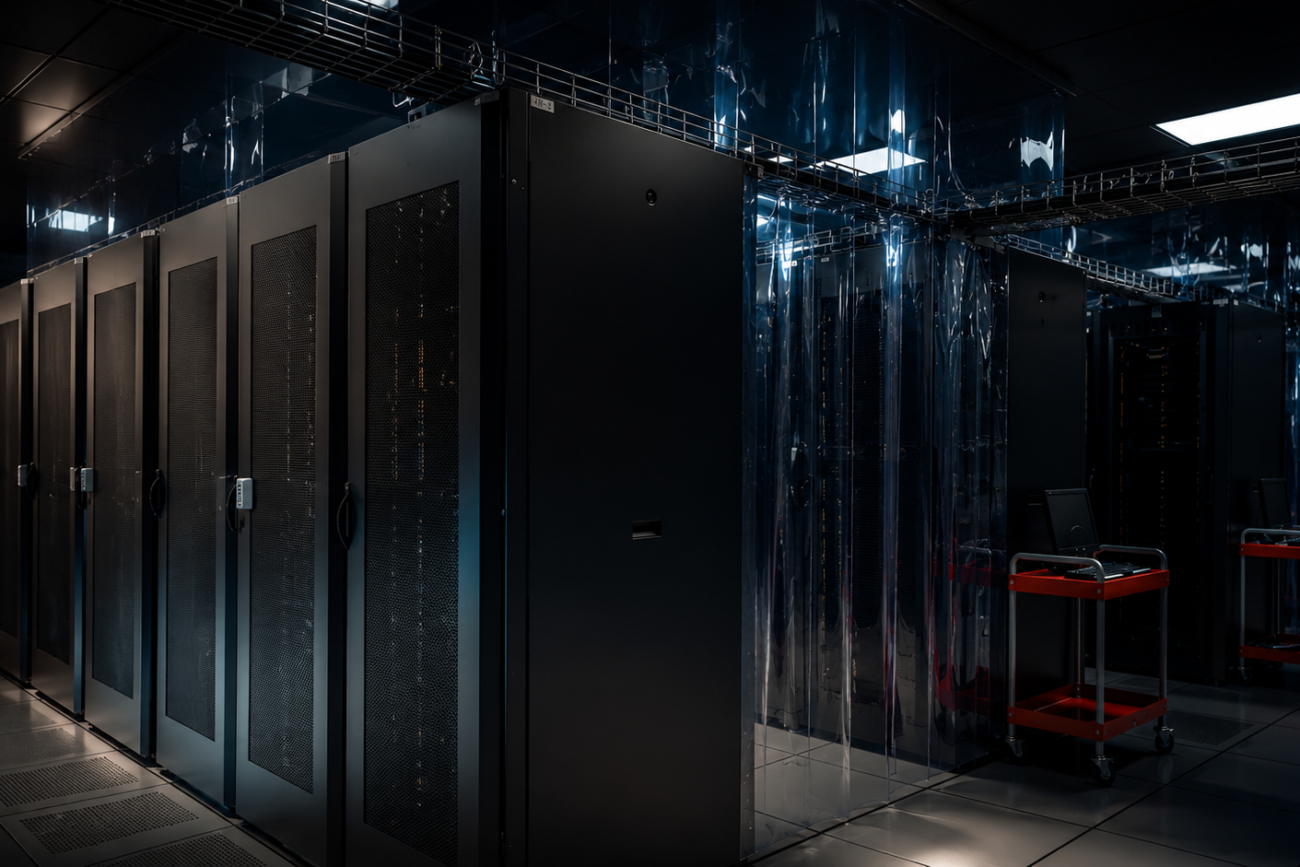
Toronto’s data centre market is running out of powered capacity. As hyperscale and AI workload demand absorbs available inventory faster than new supply can come online, Canadian enterprises face rising prices, longer lead times, and a more competitive procurement environment.
Canada’s data centre colocation market is tightening at a pace that is catching enterprise IT procurement teams off guard. Vacancy rates in the Greater Toronto Area — long the country’s dominant data centre market — have reached historic lows, driven by a combination of hyperscale absorption, surging AI infrastructure demand, and a constrained development pipeline that cannot respond quickly to the scale of new requirements entering the market.
The numbers tell a clear story. Toronto currently accounts for approximately 32 percent of Canada’s total existing data centre power capacity, with over 378 megawatts of installed capacity across the GTA. That capacity is now substantially absorbed. New supply, while under development, faces a pipeline constrained by grid access delays, land premiums in the GTA, and the multi-year lead times inherent in large-scale data centre construction.
What Is Driving the Compression
The primary driver of current vacancy compression is AI infrastructure demand. The compute requirements of large language model training and inference workloads are substantially higher than traditional enterprise IT workloads — both in terms of raw power density and in terms of the cooling and physical infrastructure requirements that accompany high-density GPU deployments.
Hyperscale operators — Microsoft, Amazon Web Services, and Google — have been absorbing large blocks of Canadian data centre capacity as part of their North American AI infrastructure expansion programmes. Microsoft alone has committed to multiple large-scale data centre projects across Quebec and Ontario, adding significant demand pressure to a market that was already running at elevated utilization.
The secondary driver is enterprise AI adoption. Canadian organizations in financial services, healthcare, and the public sector — industries that face data residency and sovereignty requirements that preclude the use of US-based hyperscale infrastructure for sensitive workloads — are actively seeking certified Canadian colocation capacity capable of supporting GPU-dense AI deployments. That demand did not exist at material scale three years ago. It is now a significant and growing component of the Canadian colocation market.
"Any shortlist built on 2022 assumptions will fail in this market. Toronto has absorbed most of its powered capacity. Enterprises that haven't locked in capacity are now competing with hyperscalers for what remains."
Where Capacity Remains
Montreal and Quebec City represent the most viable alternative market for Canadian enterprises facing GTA capacity constraints. Quebec’s access to low-cost hydroelectric power has made it an increasingly attractive location for data centre development, and the province has seen significant investment from major operators including eStruxture, which has signed CoreWeave as an anchor tenant for new capacity, and a growing number of international operators recognising the province’s cost and power advantages.
Calgary and Vancouver represent secondary markets with available capacity, though both face their own constraints — Calgary in terms of enterprise ecosystem depth, Vancouver in terms of real estate costs and power grid access in high-demand areas.
What This Means for Enterprise IT Teams
For enterprise IT and procurement teams currently assessing Canadian colocation options, the market conditions have several practical implications. Lead times for high-density colocation deployments — particularly those requiring GPU-ready power densities above 20kW per cabinet — are extending. Providers that offered six-month deployment timelines in 2023 are now quoting twelve months or longer for comparable deployments in the GTA.
Pricing is moving accordingly. Retail colocation rates in Toronto have increased materially over the past 18 months, and the market consensus among operators and brokers is that further increases are likely as the demand-supply imbalance persists.
The practical recommendation for Canadian enterprise IT teams is clear: colocation procurement decisions that might previously have been made on a two-to-three year planning horizon now warrant a five-year lens — and organisations that defer those decisions face a market that will be more expensive and more constrained when they re-engage.